

It was the best of times, it was the worst of times. With apologies to Dickens, this phrase could well describe the past month for the TPC, the Italian Carabinieri’s elite art theft unit.
On August 14, the TPC announced the successful recovery of three pieces of artwork which had been stolen last March during a late-night smash-and-grab heist at the Magnani Rocca Foundation in Parma. As with most notorious art heists, subtlety was lacking in this operation; one subject used a stolen tractor to flatten a fence before his two masked associates clambered through a window and made off with more than $10 million in valuable artwork. The loot included a Cézanne still life, a Renoir, and a Matisse. As with most smash-and-grabs, time was of the essence, and the whole event was over in a little over three minutes.
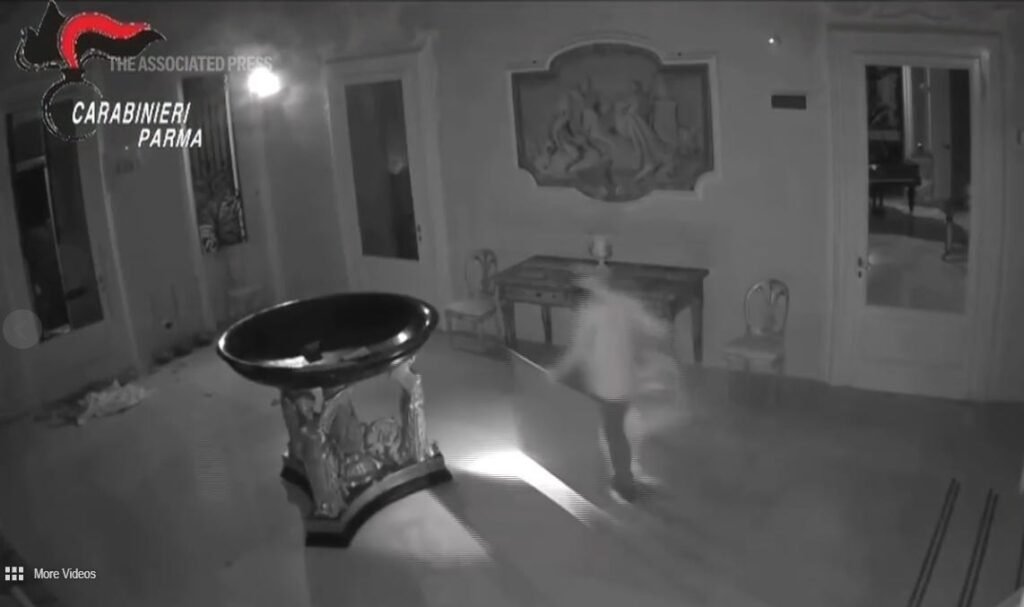
If you happen to be an Italian art crime cop, that was the best of times.
But just one day after the TPC’s triumphant announcement, yet another smash-and-grab art heist occurred in Italy, this time at the Messina Regional Museum in Sicily. In just three minutes, thieves broke into the museum and made off with four pieces by Renaissance master Antonello da Messina: three wooden panels from the 1473 San Gregorio Polyptych, and a double-sided panel depicting the Virgin Mary and Christ in Pietà.
And this, of course, was the worst of times.
Museum Thefts Have Always Been Prevalent
As one of the original members of the FBI’s Art Crime Team, and in my current role as a partner with Argus Cultural Property Consultants, I’m often asked to talk about this apparent surge in museum heists. But I’m quick to point out that these recent thefts are nothing new; in reality, art theft is a persistent and prevalent crime problem, one that has only recently come into the limelight because of last October’s daring, albeit misguided, heist at the Louvre in Paris.
A handful of recent thefts include:
- November 2019 – €113m in royal jewels stolen from the Green Vault in Dresden
- March 2020 – Spring Garden stolen from the Van Gogh Museum in Amsterdam
- August 2020 – Franz Hals’s Two Laughing Boys, valued at $18m, stolen from the Hofje van Mevrouw van Aerden in the Netherlands (its third time stolen!)
- November 2024 – Via Vitae, which depicts the life of Christ in gold and ivory and valued at $6m, stolen from the Hieron Museum in Central France
- November 2024 – Four masked robbers storm the Cognac-Jay Museum in Paris and make off with seven 18th century snuffboxes valued at $4m
- September 2025 – $2m in gold nuggets stolen from Natural History Museum in Paris
- December 2025 – Two armed robbers steal thirteen Matisse and Portinari engravings from the Andrade Library in Sao Paolo, Brazil
- August 2026 – More than sixty pieces of goldwork and art stolen in under four minutes from the Villena Museum in Spain in a late-night smash-and-grab
Again, this is not a new phenomenon. Unfortunately for aspiring art thieves, the crime is rarely rewarding from a financial standpoint. While stolen jewelry can be broken down and recut, the same cannot be said for paintings. Add to this the fact that anyone with a smartphone can do a reverse image search of a questioned piece of artwork and instantly determine if it has been reported stolen.
These pieces are instantly recognizable, and as such, have no value on the legitimate art market. Thieves belatedly come to realize that stealing art was the easy part; the harder part is getting away with it. And the hardest part of all is profiting from the crime.
Yet despite the fact that the theft of well-known paintings is rarely profitable, it continues to occur. The FBI estimates art crime (including fakes and forgeries) to be a $6 – $8 billion a year crime problem, accounting for about ten percent of the legitimate art market.
So why do thieves keep doing it? Perhaps there’s something about the astronomical dollar values affixed to high-end artwork that continues to draw criminals to museums and their esteemed collections. Coupled with the fact that most museums are protected by unarmed security guards with minimal coverage on the midnight shift, and the concept of the late-night smash-and-grab robbery becomes all the more enticing.
The Concept of the “Commissioned Art Heist” is a Fallacy
Every armchair detective has an opinion about the identities of the thieves responsible for notorious art thefts, and they continue to posit the well-trod but baseless theory that these were “skilled professionals commissioned by a private collector.” If this were true, then there must be dozens of reclusive billionaires out there, privately savoring their illicit art collections in subterranean galleries which are accessed through secret doors in libraries, all the while hidden from the prying eyes of reticent butlers.
This elusive myth continues, despite the fact that when museum thieves are eventually captured, they inevitably turn out to be low-level criminals whose misdeeds are not underpinned and financed by some shadowy evil genius. And as a point of fact, there is nothing skillful or professional about ramming a stolen tractor into a fence or smashing a vitrine with a hammer.

The concept of the commissioned art heist merits further scrutiny. Let’s take Cézanne for example, since his Still Life with Cherries was one of the pieces stolen during the Parma raid last March. During his lifetime, Paul Cézanne created nearly 1,300 pieces, many of which are available for purchase from legitimate art galleries and auction houses.
Is there any one particular Cézanne that would be so compelling to acquire that it would induce a wealthy collector to commission its theft? Knowing full well, of course, that if the stooges that were hired to pull off the job get caught – as they often do, they will most certainly identify their benefactor to the police.
I can’t speak to the sentencing guidelines in Italy, but here in the U.S., if a defendant is convicted federally with the theft of $10 million in property (roughly the value of the Parma haul), they would be facing up to twelve years in prison. That’s a high price to pay for a piece that could be purchased legally at auction.
I’m confident that the Carabinieri will identify the subjects responsible for the theft in Sicily and ultimately recover the stolen artwork. As with most museum thefts, it’s usually a question of when stolen artwork will be recovered, not if.
Steps to Better Protect Art Collections
The good news is that there are proactive and economical steps museums can take to harden their collections and make them easier to secure. AI-assisted cameras, volumetric motion sensors, tethered fastening systems, and vibration sensors are just a few of the many security innovations that can provide museums with a distinct advantage in their eternal cat-and-mouse competition with art thieves.
All of this technology is efficient and affordable, yet one of the most effective steps a museum can take to deter theft is to update their basic procedures and protocols, many of which have become woefully outdated due to technological advances.
For a thorough assessment of your institution’s security posture and to learn more about our tailored solutions, give Argus CPC a call.