

Last week marked the three-month anniversary of the Louvre Museum robbery; arguably the most notorious art heist of the 21st-century. A daring crime that was first and foremost in the news cycle for nearly two weeks was quickly replaced by more current events. Three months later the Louvre heist merits sporadic attention in the media.
None of the pieces have been recovered – at least officially – and while four subjects have been arrested, the stolen gems have yet to be recovered. This isn’t unusual for a crime of this nature.
Art Theft is Not Committed by Art Thieves
My colleagues and I were interviewed a number of times about the heist, and hopefully our consistent message resonated: While the subjects may have been adept at committing robberies, they were not art thieves. Items left behind at the scene yielded DNA which resulted in the timely arrest of two subjects; additional apprehensions quickly followed.
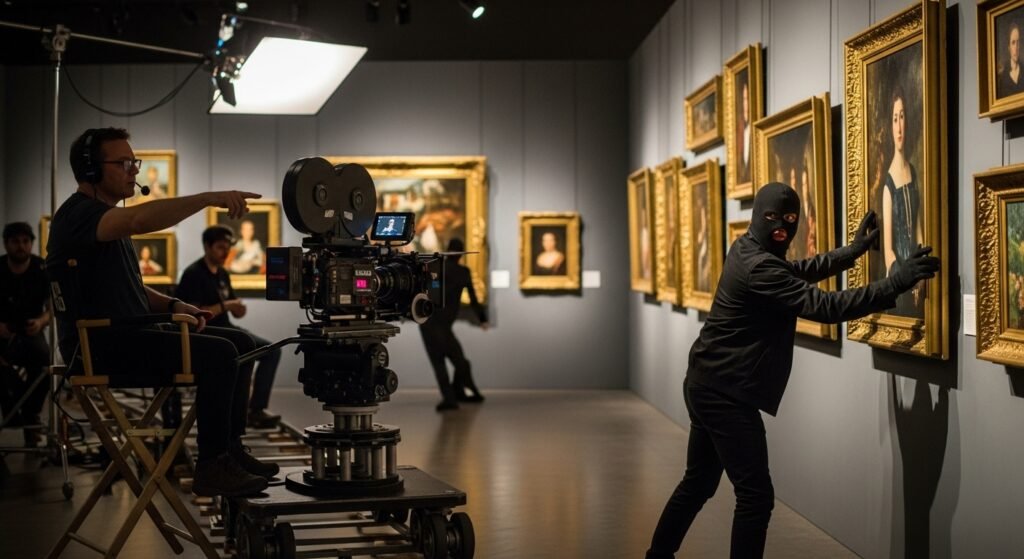
The arrests underscore the salient fact that this art theft was not a Hollywood robbery. They rarely are. And while the concept of the Dr. No super villain, ensconced in his secret lair and swirling a snifter of cognac whilst perusing his newly acquired Napoleonic treasures makes for a good action film, it is far from reality.
The reality is that museums need to do a better job of protecting their valuable collections.
Three weeks after the Louvre heist, there was another art robbery, this one in in Brazil. On December 7th , two armed subjects entered the Biblioteca Mário de Andrade in downtown São Paulo and subdued a security guard and an elderly couple before removing from a glass display case eight engravings by Henri Matisse and five Candido Portinari prints. The subjects stuffed the pieces into a canvas bag, exited the library through the main entrance, and were captured on surveillance video as they strolled brazenly down the sidewalk before climbing into a waiting getaway van.
One subject was arrested the following day, and two more were locked up before Christmas. A fourth subject, Gabriel Rodrigues de Mello, remains at large. True to form, Mello has previous convictions for robbery, aggravated theft, carjacking, and fraud. Forget Dr. No; a career felon, Mello was the archetypal art thief, and the São Paulo robbery – a smash-and-grab committed by armed subjects – was yet another example of the archetypal art heist.
Stolen Priceless Artwork are Worthless on the Open Market
Museums are meant to serve an aesthetic and educational purpose. Visitors are encouraged to spend hours gazing at its collection in quiet contemplation (I wouldn’t recommend trying that at a jewelry store or a bank). Accordingly, security must be discreet. The security protocols that we’ve come to accept in our daily lives – at airport checkpoints, sporting events, even schools – are still considered anathema at museums. This is what makes them ripe targets for thieves.
But art thieves quickly realize that there is no Dr. No ready to pay big money for stolen artwork to add to their illicit subterranean gallery. The notoriety of the crime makes it impossible to introduce the purloined artwork into the legitimate art market. And while the reality of monetizing these valuable but easily recognizable pieces is virtually impossible, every thief still dreams of that tantalizing big score, calculating the ten percent black market value on a piece valued in the tens or hundreds of millions.
It seems intriguing, but in reality, these thieves end up with van full of stolen artwork, precisely because the loot is too well-known. As a result, high value art thieves are rarely recidivists.
But that doesn’t mean that museums still don’t get robbed.
How to Think Like a Thief
Contrary to public perceptions, museums do not have unlimited budgets to protect their artwork. Sadly, billion-dollar collections do not translate into billion-dollar security systems. Museum security directors have to make do with systems that are often obsolete, outdated, or nonexistent.
It will come as little consolation to the director of a recently robbed museum to learn that the thieves will most likely not profit from the crime; the goal is to not get robbed in the first place.
Given what we learned from the recent robberies at the Louvre and the Mário de Andrade Library, it would be prudent for every museum official to take a hard look at their own security procedures and protocols and ask themselves an oftentimes inconvenient question: How do we keep from being the next victim of theft?
To thwart a thief, sometimes its beneficial to think like a thief (but only for a moment!); to stand in your galleries, amongst your treasures, and look for the blind spots in your security cameras.
- Are any high-value pieces positioned near the exits?
- Does your security team have immediate, direct communication with local law enforcement?
- Given the fact that eighty percent of all U.S. museum thefts are committed by employees or those in a position of trust – does everyone with access to collection storage areas truly need that access?
The list of questions goes on and on. In order to answer them, I would encourage all museum directors to use a trusted, outside professional who will objectively assess these risk factors and tailor a robust security program that aligns with the museum’s budget and priorities.