
A year ago, in January 2025, we wrote about four paintings stolen from the Museu Chácara do Céu in Rio de Janeiro, Brazil during Carnival. Two of those paintings, a Dali and a Matisse, had been stolen before. The next month, we wrote about a Frans Hals painting, “Twee Lachende Jongens,” also known as “Two Laughing Boys with a Mug of Beer” that had been stolen, not twice, but three times, from a small museum, the Hofje van Mevrouw van Aerden, in Leerdam, Netherlands. So, for the beginning of this new year – 2026, we revisit the multi-theft theme with the tale of another painting that has been stolen multiple times — a work by Vincent van Gogh stolen twice from the Mohamed Mahmoud Khalil collection in Egypt.
A Little History About Where the Theft Happened
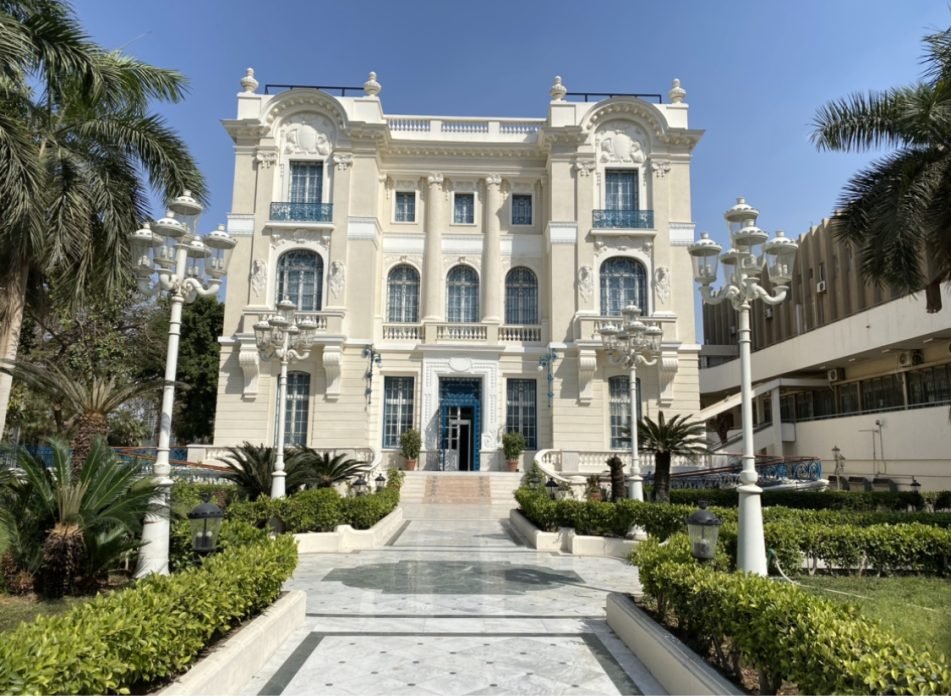
The home of the Mohamed Mahmoud Khalil Museum is a former palace that had belonged to Mohamed Mahmoud Khalil and his wife, Emilienne Luce. The museum, at No. 1 Kafour Street, stands on the bank of the Nile River in Giza, part of the metropolitan area of Greater Cairo, Egypt. The four story building, a combination of French and Ottoman architectural styles built in 1915, is the largest art museum in Egypt, with over 300 paintings, as well as sculptures and other objects.
Within its walls is one of the finest collections of 19th and 20th century art in North Africa and the Middle East, with works by van Gogh, Rodin, Gauguin, Monet, Manet, Renoir and other European masters. Also displayed in the museum are numerous antique objects from Turkiye, Iran, Japan and China, as well as works by 19th and early 20th century Egyptian artists such as Mahmoud Said, considered to be the founder of modern Egyptian painting, Ragheb Ayad, and Seif Wanly.
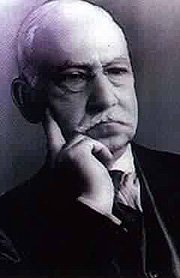

Mohamed Mahmoud Khalil, born in 1877, was an Egyptian politician, who, during his distinguished career, served as Egypt’s agricultural minister, President of the Egyptian Senate, and the first President of the Arab League. He studied law at the Sorbonne in Paris in 1897 and met his wife, Emilienne Luce, while he was there. Luce, who was an art lover and collector, instilled the same passion for art in her husband, who became an avid art collector.
Mohamed Mahmoud Khalil was instrumental in the founding of the Egyptian Society of Fine Arts Lovers in 1924 and served as its chairman from 1942 to 1952. He managed the Egyptian pavilion at the International Exhibition of Paris in 1937 and, in 1949, he was elected a member of the French Academy of Fine Arts, honoring his efforts to promote cultural exchange between France and Egypt. In addition, Khalil, a patron of many Egyptian artists, was instrumental in founding the Museum of Modern Egyptian Art, now located in the Cairo Opera House complex.
Khalil died in 1953 and left his palatial home and its possessions to his wife. Upon her death in 1960, in accordance with her late husband’s wish, Emilienne bequeathed the building and its collections to the Egyptian government for the purpose of preservation as a museum. The Mohamed Mahmoud Khalil Museum opened in July 1962.
In the early 1970’s, however, President Anwar El Sadat, who had moved into a mansion across the street, commandeered the building for use as government executive offices, and the museum’s collections were transferred to the Prince Amr Ibrahim Palace in Zamalek on Gezira Island in wester Cairo (now known as the Islamic Ceramics Museum). After Sadat’s assassination in 1981 and subsequent executive changes made by President Hosni Mubarak, the palace once again opened as a museum in the mid-1990’s. In 1994, a number of paintings from the collection were lent to the Musée d’Orsay in Paris for an exhibition, Les Oubliés du Caire.
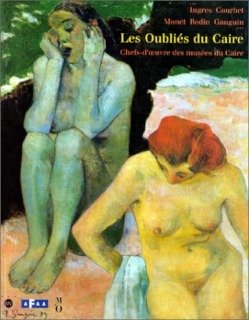
Poster for the Musée d’ Orsay1994-1995 exhibition, Les Oubliés du Caire, from Musée d’Orsay
How the Theft Happened
Sometime after the museum had opened on the morning of Saturday, August 21, 2010, museum staff members found that van Gogh’s “Poppy Flowers” had been cut from its frame and taken. According to one report, guards were praying at the time of the theft. An investigation into the theft revealed that, at the time the painting was stolen, none of the alarms were working and only seven of the museum’s 43 surveillance cameras were in operation.
There was a great deal of confusion in the initial aftermath of the theft. Egypt’s Minister of Culture at the time, Farouk Hosni, announced that same day that police had confiscated the painting from an Italian couple at the airport in Cairo. He walked back that statement later in the day, stating that his announcement had been based on “false and incorrect” information and that law enforcement authorities were still searching for the missing van Gogh work.
In an unusual move for this type of theft, the Egyptian Prosecutor General, Abdel-Meguid Mahmoud, opened an investigation for neglect and professional delinquency at the museum and ordered that four security guards for the museum and Deputy Culture Minister Mohsen Shalaan be detained. The security guards were accused of neglect for not checking visitors to the museum. Shalaan, who had an office in the museum and was responsible for its finances and administration, was accused of neglect of his duties and failure to “improve lax security measures by replacing the broken cameras and alarms.”
Shalaan, in response to the accusations against him, stated that he was “not going to be a scapegoat” and said that he had given a warning in 2007 about the non-working alarms and cameras at the museum but Minister of Culture Hosni had failed to provide the proper resources to correct the deficiencies in the museum’s security system. In October 2010, Shalaan and ten other officials from the Ministry of Culture were convicted of gross negligence and incompetence in connection with the theft, and were sentenced to three years imprisonment. The painting, however, had not been recovered in the investigation.
This was not the first theft of the van Gogh painting from the collection, but it was the first theft of the painting from its home in Giza. In the late 1970’s, “Poppy Flowers” was stolen while it was residing in the Prince Amr Ibrahim Palace. Very little information is known about that first theft. A brief blurb in the New York Times from June 7, 1978 merely stated that the van Gogh painting had “been stolen from a public gallery” in Cairo. The painting was recovered from Kuwait several years later, again with very little known about that recovery, with various reports that the recovery had occurred two or ten years after the theft.
To date, no information has been uncovered about the location of the stolen-for-the-second-time “Poppy Flowers.”
The Takeaway from the Second Theft
It is indisputable that this theft stemmed from the inadequacy and failure of the security at the Mohamed Mahmoud Khalil Museum in 2010. The day after the theft, Prosecutor General Abdel-Meguid Mahmoud stated publicly that the museum’s security measures were “for the most part feeble and superficial.” Martin Bailey, in his Adventures with van Gogh blog, described his visit to the museum in 2007. According to Bailey, he was the only guest in the museum at the time of his visit, van Gogh’s “Poppy Flowers” was hung in a room of its own, the three security guards on duty were together just inside the entrance to the building “engrossed in conversation and smoking,” and no security personnel were upstairs with the artwork.
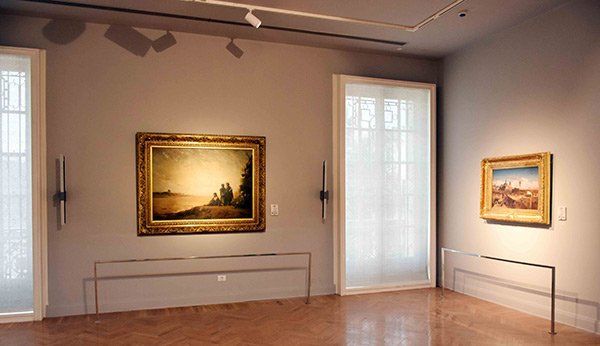
Renovated gallery in the Mohamed Mahmoud Khalil Museum [image from fineart.gov.eg]
The museum has since addressed those multiple security failures. After the 2010 theft, the museum was closed for a significant period of time – over ten years. It reopened in April 2021 with major renovations to its infrastructure, including the ventilation, electrical, lighting and security systems. More sophisticated security alarms have been installed and the museum’s paintings are better protected by laser security alarms with a sound alarm that is triggered by a visitor stepping in too close to a painting. In addition, security personnel and cameras are present on the floors open to visitors.
How to Identify this Missing Piece of History
The missing oil on canvas, painted in 1887, just three years before van Gogh’s suicide, is believed, based on most reports, to be 12 inches (30 centimeters) high by 12 inches (30 centimeters) wide. Some other reports have given different sizes for the painting. The painting depicts a bouquet of brilliant yellow flowers and several red poppy flowers in a vase, against a dark background, with some petals haven fallen off the bouquet onto a table. At the time of the theft, the painting had a value of approximately $55 million USD.
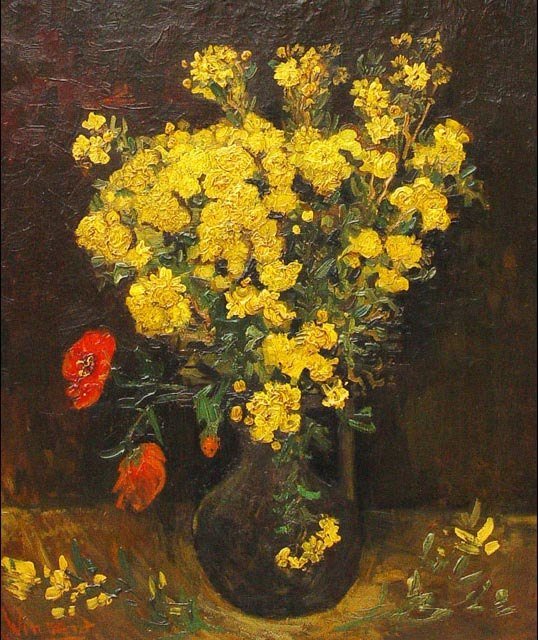
“Poppy Flowers,” also known as “Vase and Flowers” and “Vase with Viscaria”, by Vincent van Gogh, 1887, most recently stolen from the Mohamed Mahmoud Khalil collection in Egypt in 2010 [image from Wikimedia Commons]
Why this Missing Piece of History is Important
Vincent van Gogh’s importance as an Impressionist artist scarcely needs retelling. During his relatively brief artistic career, van Gogh revealed a striking emotional style with his use of color, brushwork and bold forms. The stolen “Poppy Flowers” illustrates a turning point in van Gogh’s style in the mid to late-1880’s.
In 1886, Vincent van Gogh visited the eighth, and last, Impressionist Exhibition in Paris, which was financed by Berthe Morisot and Eugène Manet. This last exhibition featured works by Impressionist artists such as Mary Cassatt, Edgar Degas, Paul Gaugin, Georges Seurat and Camille Pisarro. It was at this exhibition that Seurat showed his pointillist masterpiece, “A Sunday on La Grande Jatte.”
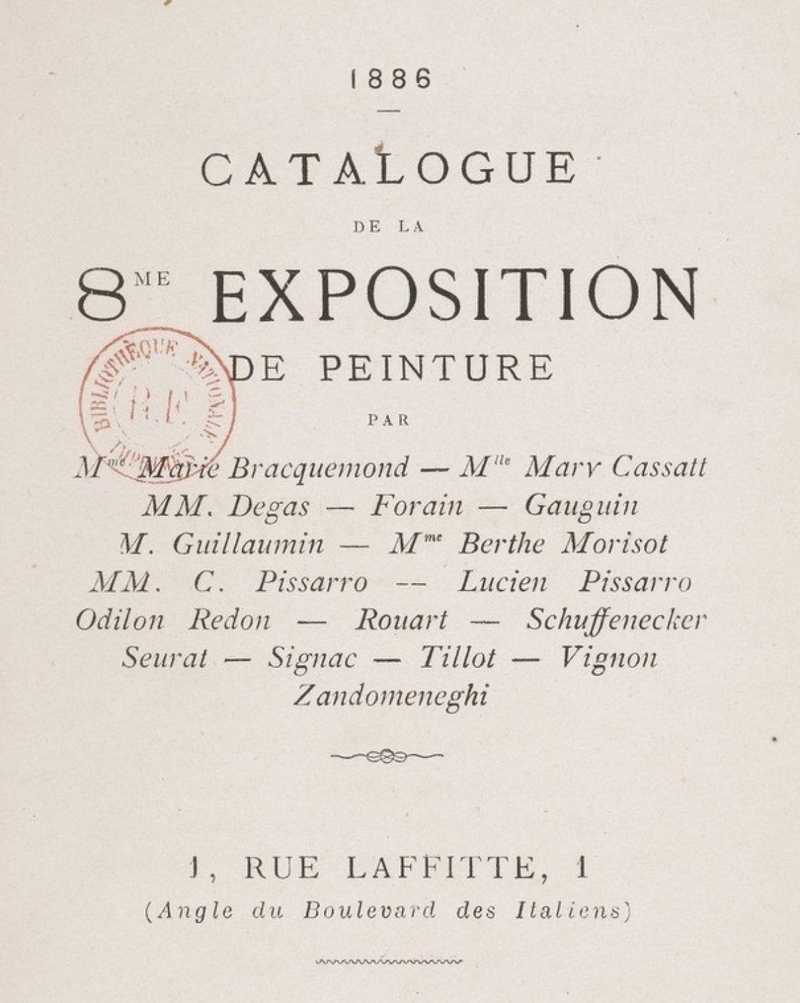
Van Gogh wrote to a friend, Horace Mann Livins, in October of that year: “In Antwerp I did not even know what the Impressionists were, now I have seen them and though not being one of the club, yet I have much admired certain Impressionist pictures – Degas, nude figure – Claude Monet, landscape.” He also described his work at that time:
“I have lacked money for paying models, else I had entirely given myself to figure painting, but I have made a series of colour studies in painting simply flowers, red poppies, blue corn flowers, and myosotis. White and rose roses, yellow chrysanthemums – seeking oppositions of blue with orange, red and green, yellow and violet, seeking THE BROKEN AND NEUTRAL TONES to harmonize brutal extremes.”
In this same vein, his brother Theo had written to their mother about Vincent’s work that summer: “He is painting flowers mostly, mainly in order to make his next paintings more colourful. . . . He also has acquaintances from whom he receives a beautiful delivery of flowers every week which can serve him as a model.”
For the next four years, until his death in 1890, van Gogh captured flowers, particularly poppies, on canvas, completing seven paintings of these flowers in that period. Those paintings, diverse in their treatment of the flower, include the missing “Poppy Flowers,” as well as “Vase with Red Poppies” in 1886, “Vase with Cornflowers and Poppies” in 1887, “Edge of a Wheat Field with Poppies in 1887, “Butterflies and Poppies” in 1889, and “Field with Poppies” and “Still Life: Red Poppies and Daisies” in 1890.
The stolen “Poppy Flowers” also demonstrates the influence of Adolphe Monticelli, a French artist from Marseille, on van Gogh while he was in Paris. Monticelli’s work was characterized by the use of rich, abundant color and thick, visible brush strokes. In a letter to his brother Theo in September 1888, van Gogh wrote: “I’m forced to lay the paint on thickly, à la Monticelli. Sometimes I really believe I’m continuing that man’s work.” Indeed, the stolen painting bears a strong resemblance to a Monticelli painting that is also part of the Mohamed Mahmoud Khalil Museum’s collection.
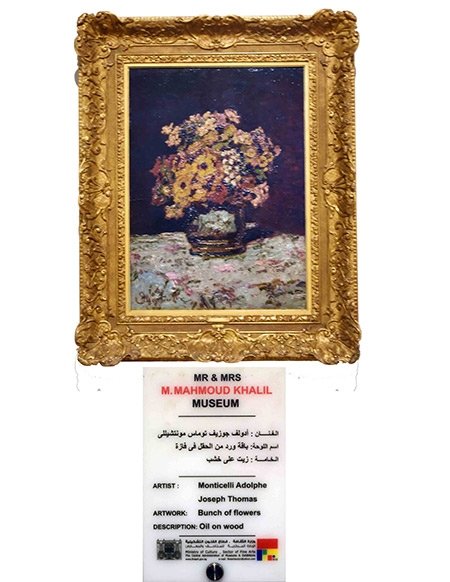
“Bunch of Flowers” by Adolphe Monticelli, from fineart,gov.eg (Mohamed Mahmoud Khalil Museum)
What to Do if You Know Where This Missing Piece of History Is
If you recognize van Gogh’s painting “Poppy Flowers,” have any information about it, or know its whereabouts, please call us at 1-202-240-2355 or send us an email at contact@arguscpc.com.
Read more “Still Missing” articles here: https://arguscpc.com/category/still-missing/